
How to Track Customer Deposits and Outstanding Balances

A customer pays part of an order today and promises to send the rest on Friday. Another pays for two items in one transfer. By the weekend, you know money has arrived, but matching every amount to the right order takes longer than it should.
A clear payment record starts with a simple rule: every confirmed payment should have an identifiable purpose. That gives you a useful answer when a customer asks how much they still owe.
Start with the agreed total
Before recording a deposit, confirm the order price and what it covers. Clarify delivery, optional extras and any work that could change the final amount.
For an illustrative ₦60,000 order with a confirmed ₦20,000 deposit, the balance is ₦40,000. Keep those three figures together: order total, amount received and amount outstanding.
If the scope changes, agree the revised total with the customer and update the record. An old price beside a new specification makes follow-up harder.
Check the payment before confirming it
Verify receipt through your bank or payment-provider records. A screenshot is useful context, but your own records should establish whether you received the money.
Capture the amount, payment date, method and reference where available. Link the payment to the relevant order rather than relying on the payer’s name alone. Someone may pay through a friend’s account, and repeat customers may have several open orders.
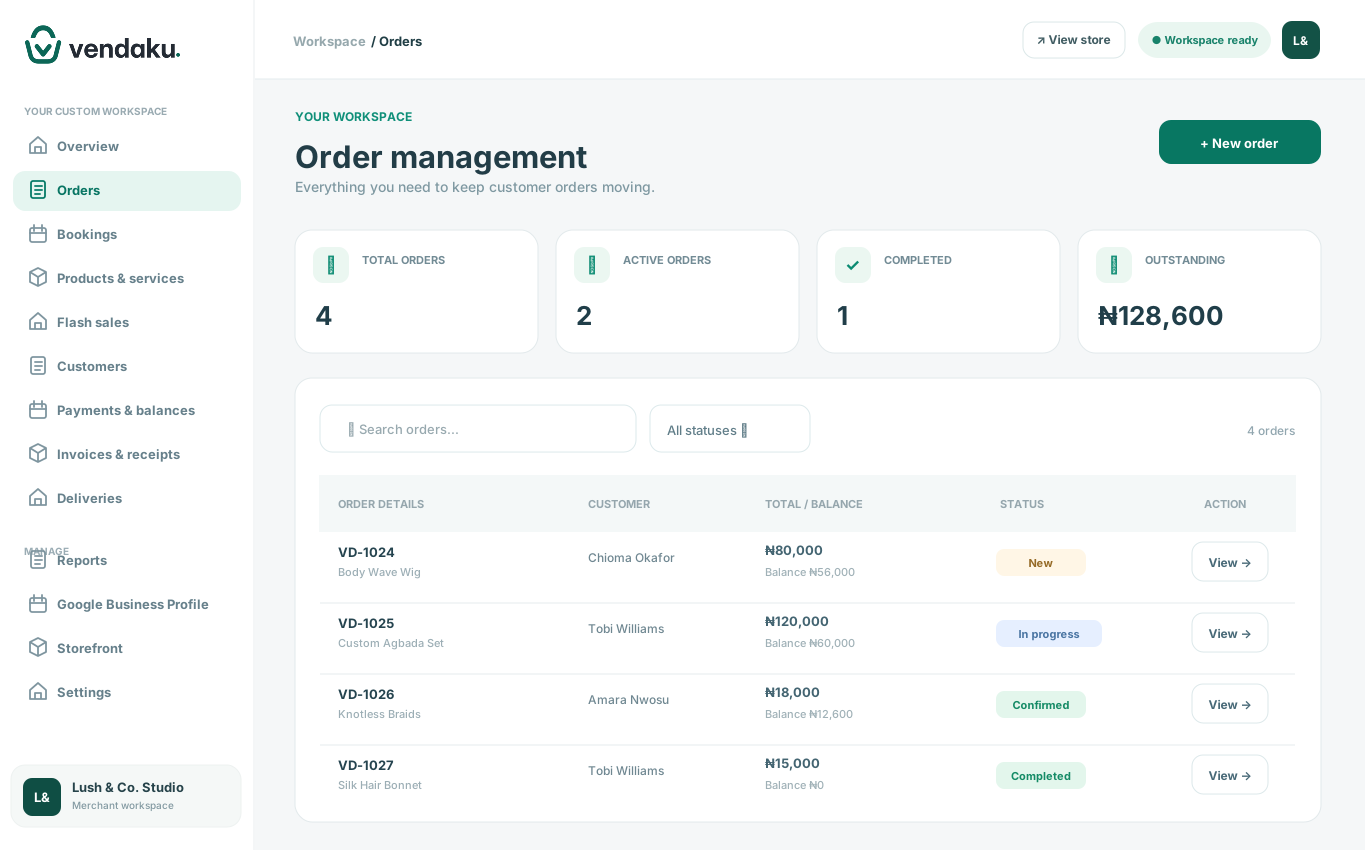
Vendaku lets you record payments against orders and review outstanding balances. These are merchant-confirmed records: you remain responsible for checking receipt.
Agree when the balance is due
Tell the customer when you expect the next payment. Depending on your arrangement, that might be before production, before dispatch or at another agreed stage.
Use a clear message: “Your confirmed payment is ₦20,000. The remaining balance is ₦40,000, due before dispatch on the agreed date.” Replace the amounts and terms with the actual agreement.
When you send a follow-up, refer to the order and balance. A specific message is easier for the customer to act on than “Please send the money.”
Review balances as part of your routine
Set aside time to check open orders. Look for payments that have not been matched, balances approaching their agreed due point and orders whose totals have changed.
Keep confirmed collections separate from the full value of orders. An order worth ₦60,000 does not mean you have collected ₦60,000. You also need your business expenses to understand profitability; payment totals alone cannot tell you that.
Finish with an accurate record
After the final payment is confirmed, check that the balance reflects it. Where appropriate, issue a receipt that matches the transaction and keep it with the order history.
A dependable payment routine gives you a clearer view of what has arrived and what still needs attention.
Keep deposits and balances close to the work they belong to. Explore Vendaku’s payment records or start your 30-day Starter trial.